
 Global
 United States
  Japan
Japan 



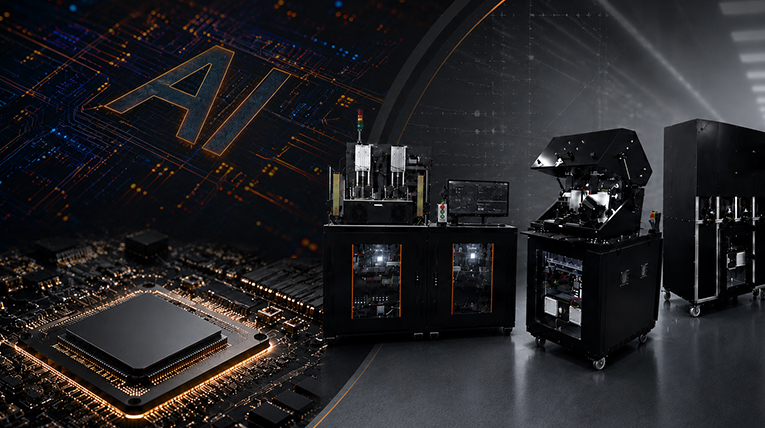
Semiconductor manufacturers today face increasing pressure to improve yield, maintain consistent quality, and reduce testing costs as chip designs shift from traditional manual blueprints to AI-assisted, modular, and 3D architectures.
Automated Test Equipment (ATE) plays a critical role in meeting these requirements by enabling accurate, high-speed semiconductor testing at various stages of production.
ATE is more than a system for identifying defective devices. Combined with test data, analytics, and process feedback, it can help manufacturers detect defects earlier, improve test coverage, reduce false failures, minimise test escapes, and identify patterns that contribute to yield loss.
Table of Contents
Semiconductor Yield and Why Does It Matter?
Semiconductor yield represents the proportion of manufactured devices or dies that meet the required specifications. Higher yield generally means more usable devices from the same manufacturing resources, directly affecting production efficiency and cost.
It is important to distinguish between manufacturing yield and test yield.
Manufacturing yield reflects how many devices are successfully produced without defects, while test yield reflects how many devices pass the defined testing criteria. Accurate semiconductor testing is essential because an unreliable test process can result in false passes or false failures.
This makes test accuracy a critical factor to semiconductor quality and overall manufacturing economics. A test process that allows defective devices to pass can also increase DPPM (Defective Parts Per Million) and create downstream quality risks.
Understanding ATE in Semiconductor Testing
Automated Test Equipment (ATE) combines hardware, instrumentation, interfaces, and test software to evaluate the electrical and functional performance of semiconductor devices.
During testing, the Device Under Test (DUT) is evaluated against predefined specifications to identify devices that do not meet electrical, functional, or performance requirements.
Key Semiconductor Tests Performed Using ATE
Semiconductor testing involves multiple electrical and functional measurements designed to verify whether a device operates within its specified limits. The exact test strategy depends on the device type and application; still, semiconductor test equipment can support a combination of DC, functional, timing, memory, analog, mixed-signal, and high-speed interface testing.
DC and Parametric Testing: Measures electrical characteristics such as leakage current, supply current, voltage levels, resistance, and other device parameters to verify compliance with specifications.
Functional Testing: Applies predefined input patterns and evaluates device outputs to verify that the semiconductor performs its intended logical or functional operations.
Timing and Performance Testing: Evaluates device operation against timing and performance requirements, including operating frequency, propagation delays, and timing margins.
Memory Testing: Tests embedded or standalone memory for faults related to memory cells, addressing, read/write operations, and data retention, depending on the device architecture.
Analogue and Mixed-Signal Testing: For devices containing ADCs, DACs, PLLs, sensors, or other analogue functions, ATE can provide precision stimulus and measurement capabilities to validate analogue performance.
High-Speed Interface Testing: Advanced SoCs and computing devices increasingly integrate interfaces such as PCIe, DDR, Ethernet, USB, and SerDes, requiring ATE platforms that can validate high-speed electrical and functional performance.
Together, these tests help determine not only whether a device passes or fails, but also whether its electrical and performance characteristics remain within defined production limits.
How Automated Test Equipment (ATE) Improves Semiconductor Yield
One of ATE’s most important contributions is its ability to improve the accuracy and effectiveness of the testing process.
Early Defect Detection
Testing devices earlier can help identify defective dies before additional manufacturing value is added. At wafer level, this can prevent unsuitable dies from progressing to packaging and final assembly.
Improved Test Coverage
Modern semiconductor devices contain increasingly complex functions and interfaces. ATE can execute large numbers of predefined test conditions to evaluate different aspects of device performance.
Higher test coverage can improve the ability to detect defects that may otherwise escape production testing.
A test escape, where a defective device passes the test process and reaches a later manufacturing stage or customer, can have a significantly greater cost and quality impact than identifying the defect during production testing.
Reducing False Passes and False Failures
Test accuracy directly influences yield and quality. A false pass allows a defective device to move forward, potentially contributing to test escapes, customer returns, and higher DPPM. A false failure can cause a functional device to be rejected unnecessarily, reducing effective yield.
Accurate instrumentation, calibrated equipment, appropriate test limits, and optimised test programs help reduce both scenarios.
Optimising Test Time and Throughput
In high-volume semiconductor manufacturing, test time directly influences production throughput and cost of test. As device complexity increases, additional test patterns and measurements can improve coverage but may also increase the time each device spends on the tester.
ATE test strategies therefore need to balance test coverage, test time, throughput, and quality. Techniques such as multisite or parallel testing allow multiple devices to be tested simultaneously, while optimised test sequences can reduce unnecessary test execution.
Test program optimisation can also involve analysing test data to identify redundant tests, optimising test limits and sequencing tests so that clearly defective devices are identified earlier in the test flow. The objective is to achieve the required test coverage and quality level while minimising tester time per device and maximising overall equipment utilisation.
The Role of ATE in Semiconductor Reliability Testing
Reliability testing evaluates how semiconductor devices perform under defined stress conditions. Depending on the device and application, this can involve electrical, thermal, voltage, temperature, or lifetime-related testing.
High-temperature semiconductor testing, for example, can be used to evaluate device performance under elevated temperature conditions.
ATE can support automated measurement and data collection during appropriate reliability testing activities, enabling engineers to identify performance degradation, abnormal behaviour, or potential reliability issues.
Production testing and reliability testing serve different purposes, but together they provide a broader view of semiconductor device quality and performance.
Using ATE Test Data for Semiconductor Process Control
Every test generates data. When this data is analysed alongside manufacturing and process information, it can provide insights into recurring defects, process variation, and yield excursions.
E.g: If a particular electrical parameter shows an increasing failure trend across production lots, engineers can investigate whether the pattern is associated with a specific manufacturing process or operating condition.
This creates a Semiconductor Process Control feedback loop:
Testing → Test Data → Failure Analysis → Process Insights → Corrective Action → Yield Improvement
ATE therefore becomes an important data source for semiconductor process control and Statistical Process Control (SPC).
ATE in Wafer Testing and Final Test
Wafer testing evaluates semiconductor dies before they are cut and packaged. It helps identify defective dies early and prevents devices that fail specifications from moving into more expensive downstream stages.
A typical semiconductor testing flow includes:
Wafer Fabrication → Wafer Sort/Probe → Packaging → Final Test → Reliability/Qualification → System-Level Test
Main ATE Equipment Components
- Wafer Prober: Positions individual dies for testing.
- Probe Card: Establishes electrical contact with the die.
- ATE Tester: Generates test signals, measures device responses, and determines whether the die meets specifications.
- Test Interface: Provides the electrical and mechanical connection between the ATE and the device under test.
Together, these components enable accurate, repeatable, and high-volume semiconductor testing.
The table below summarises how these stages fit into the overall testing lifecycle
| Testing Stage | Tested Asset | Primary Purpose |
| Wafer Sort | Unpackaged dies | Identify defective dies before packaging and improve yield |
| Final Test | Packaged devices | Verify electrical, functional, timing, and performance specifications |
| Burn-In & Reliability Testing | Packaged devices | Evaluate performance under defined electrical and environmental stress |
| System-Level Test | Packaged device/system | Validate behaviour under application-relevant operating conditions |
| Failure Analysis | Semiconductor package/device | Identify structural, packaging, and physical defects |
ATE Applications Across Semiconductor Devices
ATE requirements vary significantly depending on the semiconductor device being tested. A digital processor, power semiconductor, memory device, and mixed-signal IC can require different test instrumentation, interfaces, measurement accuracy, power delivery, and test methodologies.
ATE platforms can support testing across a range of semiconductor applications, including:
- Processors, MCUs and SoCs: Functional, parametric, memory, timing, power, and interface testing.
- Memory Devices: Read/write functionality, memory-cell faults, addressing, performance, and data integrity testing.
- Analog and Mixed-Signal ICs: Precision voltage, current, frequency, ADC/DAC, PLL, and signal-performance measurements.
- Power Semiconductors: Electrical characterisation and measurements such as leakage, breakdown voltage, switching behaviour, and device-specific power parameters.
- Automotive Semiconductors: Testing across defined operating conditions with emphasis on consistent quality, traceability, reliability, and low defect levels.
- High-Performance Computing and AI Devices: Testing complex digital logic, high-speed interfaces, memory connectivity, power characteristics, and performance across increasingly complex semiconductor architectures.
As device architectures evolve, semiconductor test platforms must support higher device complexity, greater channel density, faster interfaces, increased power requirements, and more sophisticated test methodologies.
The Future of ATE-Driven Yield and Quality Improvement
As semiconductor architectures evolve toward chiplets, HBM, 2.5D/3D integration, and AI/HPC devices, semiconductor testing is becoming increasingly distributed across the manufacturing lifecycle.
Testing may extend from wafer-level die screening and known-good-die testing to package-level and system-level validation. At the same time, AI and machine learning can support large-scale test-data analysis, anomaly detection, adaptive test strategies, and predictive yield analysis.
These developments are pushing ATE beyond conventional pass/fail testing toward a more connected and data-driven role in semiconductor manufacturing.
Why Choose VVDN for Semiconductor ATE Testing?
VVDN brings together semiconductor engineering, hardware development, test automation, software, and manufacturing expertise to support ATE and semiconductor testing requirements.
Our engineering approach can span the test lifecycle from test requirement definition and ATE architecture to DUT interface development, test software, validation, optimisation, automation, and production deployment.
By combining engineering and manufacturing capabilities, VVDN can help organisations build scalable testing solutions focused on test coverage, throughput, yield, quality, traceability, and cost of test.
Looking to improve your semiconductor testing capabilities?
Contact VVDN to explore scalable ATE testing solutions tailored to your requirements.